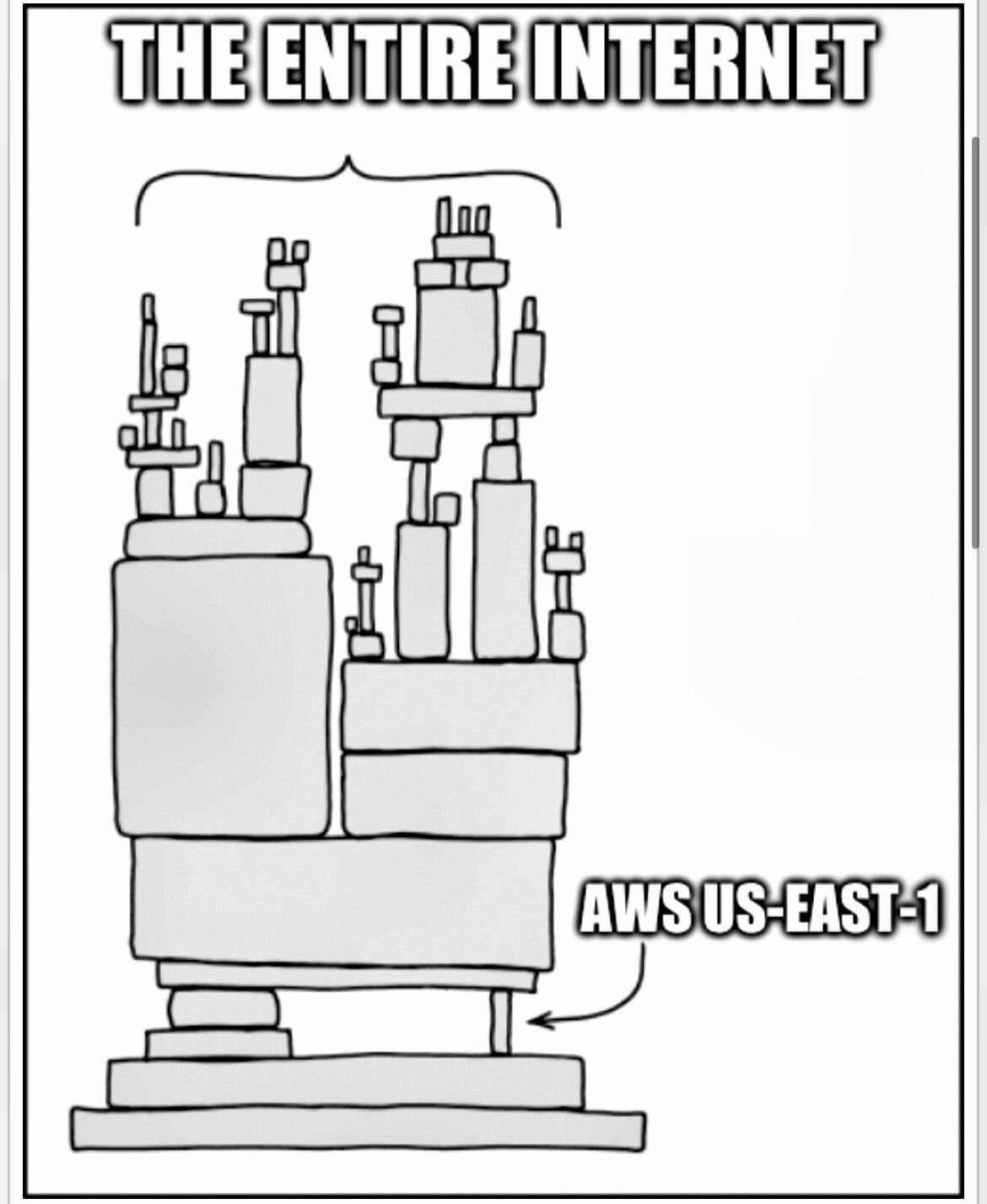
Early Monday morning, millions woke up to find their favorite apps had stopped working. Snapchat wouldn't load. Fortnite and Roblox were frozen. Signal messages sat undelivered. Even Amazon's own Ring doorbells and Alexa devices went silent.
The reason? Amazon Web Services went down.
For three hours, a huge chunk of the internet simply stopped. Not because those apps and services broke—but because they all ran on the same infrastructure. Someone else's infrastructure.
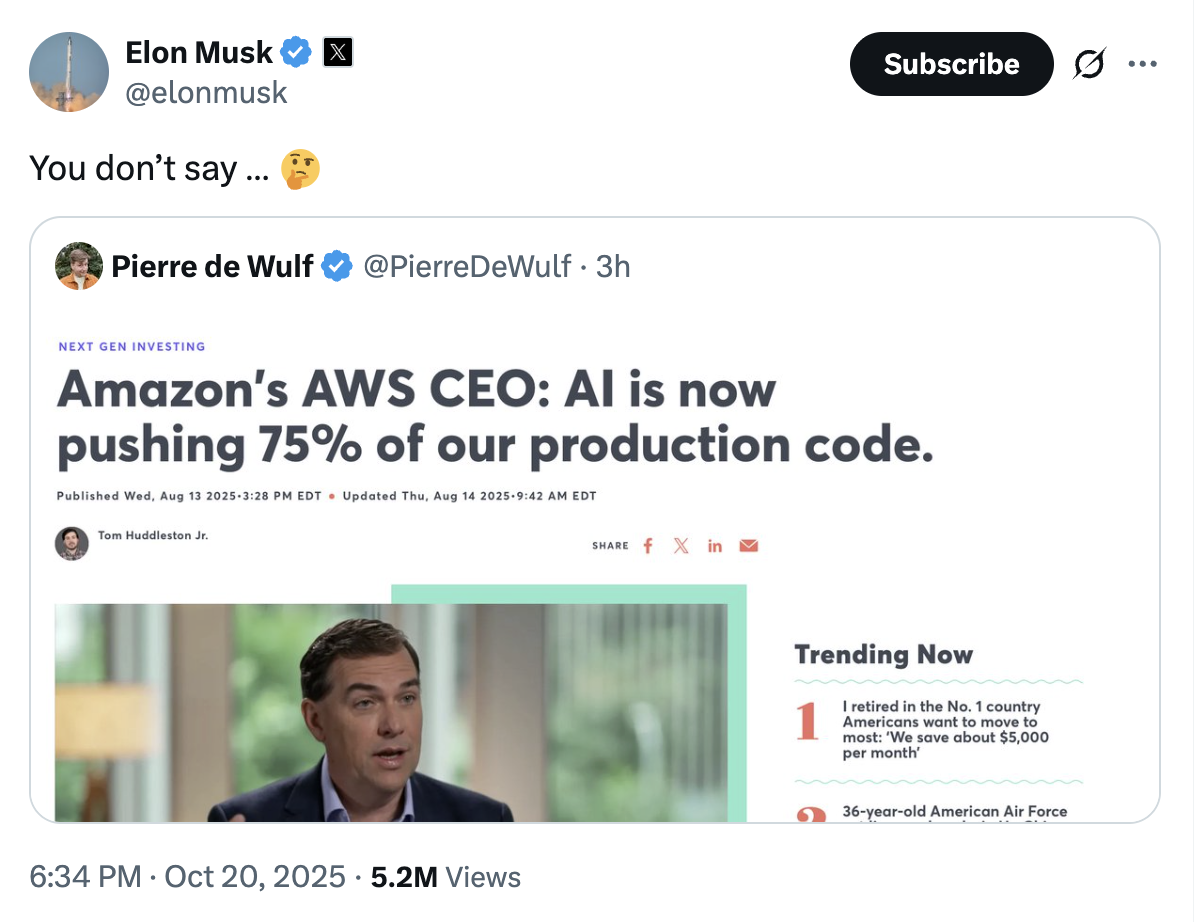
When One Provider Controls Too Much
This keeps happening. AWS goes down. Google Cloud fails. Azure has issues. Cloudflare stumbles. And every time, the same thing occurs: one small problem snowballs into a worldwide crisis.
Cloud services were supposed to make everything more reliable. In many ways, they did. Deploying apps became easier. Scaling became simpler. Things worked great—until they didn't.
The real issue isn't that these companies are bad at what they do. It's that so much of the internet depends on so few providers. When one has a problem, everyone feels it.
Building your entire business on someone else's platform means accepting their risks:
- Their downtime becomes your downtime - When they're offline, so are you
- Their price changes become your budget problem - Rates go up, you pay more or migrate
- Their decisions become your roadmap - They sunset a service, you scramble to adapt
- Their security issues become your crisis - An attack on them affects you too
Your reliability, costs, and user experience now depend on decisions made by people you've never met, in buildings you've never seen.
What Self-Hosting Gets You
Self-hosting means running your own servers. It could be a cloud VPS, a physical server, or even a Raspberry Pi. The key difference is control.
When you control your infrastructure, you get:
- Full decision power - You pick when to upgrade, how to configure, when to roll back
- Data ownership - Your information lives where you choose
- Spread-out risk - Use multiple providers so one failure doesn't kill everything
- Real independence - Stay running when big platforms go red
This isn't about ditching the cloud entirely. It's about not putting all your eggs in one basket.
What You Take On
Self-hosting means taking on more responsibility. Let's be clear about what that means:
- Keeping software updated and secure
- Watching systems and responding to alerts
- Creating and testing backup plans
- Fixing problems yourself when things break
But here's what you gain: control over your own fate.
Your site doesn't vanish because someone fat-fingered a config file. Your app doesn't slow down because a neighbor is hogging resources. You make decisions based on your needs, not theirs.
For many people, this isn't just about technology—it's about philosophy. Running your own infrastructure means you own your destiny.
The Smart Middle Ground
Monday's outage doesn't mean cloud services are terrible. It means relying completely on any single provider is risky.
The smart approach mixes both:
- Use cloud services for handling traffic spikes and global reach
- Self-host critical systems that need to run 24/7 no matter what
- Spread across providers so no single failure kills you
- Keep local backups as a safety net
This hybrid approach gives you the cloud's flexibility plus your own reliability. One outage can't take everything down.
Building a Stronger Internet
Every big outage sends the same message: spread out, diversify, own your core systems.
The internet wasn't designed to run on a handful of giant clouds. It was built to be distributed—many servers, many locations, many owners. The closer we get back to that vision, the more resilient everything becomes.
Next time a major service crashes, use it as motivation. Start that self-hosting project you've been putting off. Learn to run your own infrastructure. Build something that stays online when status pages turn red.
The cloud will always have its place. But the systems that last are the ones you truly control.